Artificial intelligence is currently transforming entire industries – including Corporate Real Estate Management.
The key question is no longer whether AI will be used, but how companies can use the technology in a meaningful way.
With KI Mission CREM, AIS Management has created a format that addresses exactly this point: away from theoretical discussions and toward concrete use cases and measurable benefits.
Together with CREM and FM decision-makers, we identify relevant challenges, develop AI use cases and create the basis for practical implementation.
Why now?
Rising requirements for efficiency, sustainability and transparency are meeting a technological development that continues to open up new possibilities. For companies, it is becoming increasingly important to build experience and identify specific areas of application.
KI Mission CREM offers a platform for exchange, the joint development of solutions and the preparation of initial pilot projects.
The launch in Munich
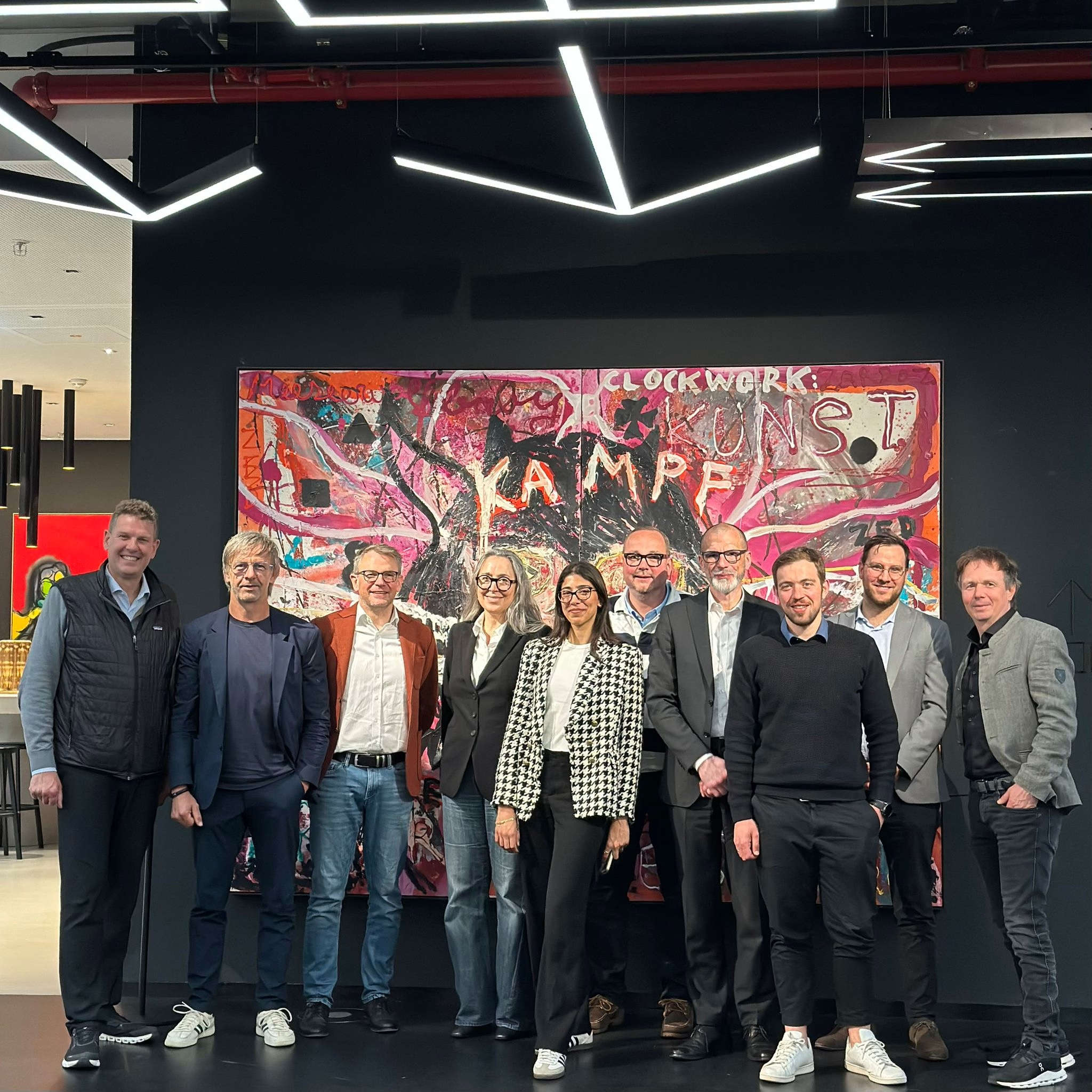
In April, KI Mission CREM officially launched in Munich. Hosted by Serviceplan at the House of Communication, CREM and transformation experts from various companies came together to analyse real challenges along the CREM process chain and develop initial AI use cases.
The workshop was particularly shaped by the open exchange among the participants. Contributors included Andreas Schilski (EDAG Group), Axel Schörner (Serviceplan Group), Bernard Zeidler (BayWa AG), Karl Dollinger (BSH Home Appliances Group), Carsten Röger (Munich Re), Mihael Lacković (AOK Bayern) as well as Daniela Albrecht and Markus Zeimet (Allianz ONE).
Their different perspectives, experience and practical examples made a significant contribution to identifying concrete fields of application for AI in Corporate Real Estate Management.
Special thanks also go to Axel Schörner and the Serviceplan Group team for their hospitality and the inspiring setting at the House of Communication.
The result: initial prioritised use cases, concrete solution approaches and a shared foundation for the next steps of KI Mission CREM.
The continuation in Hamburg
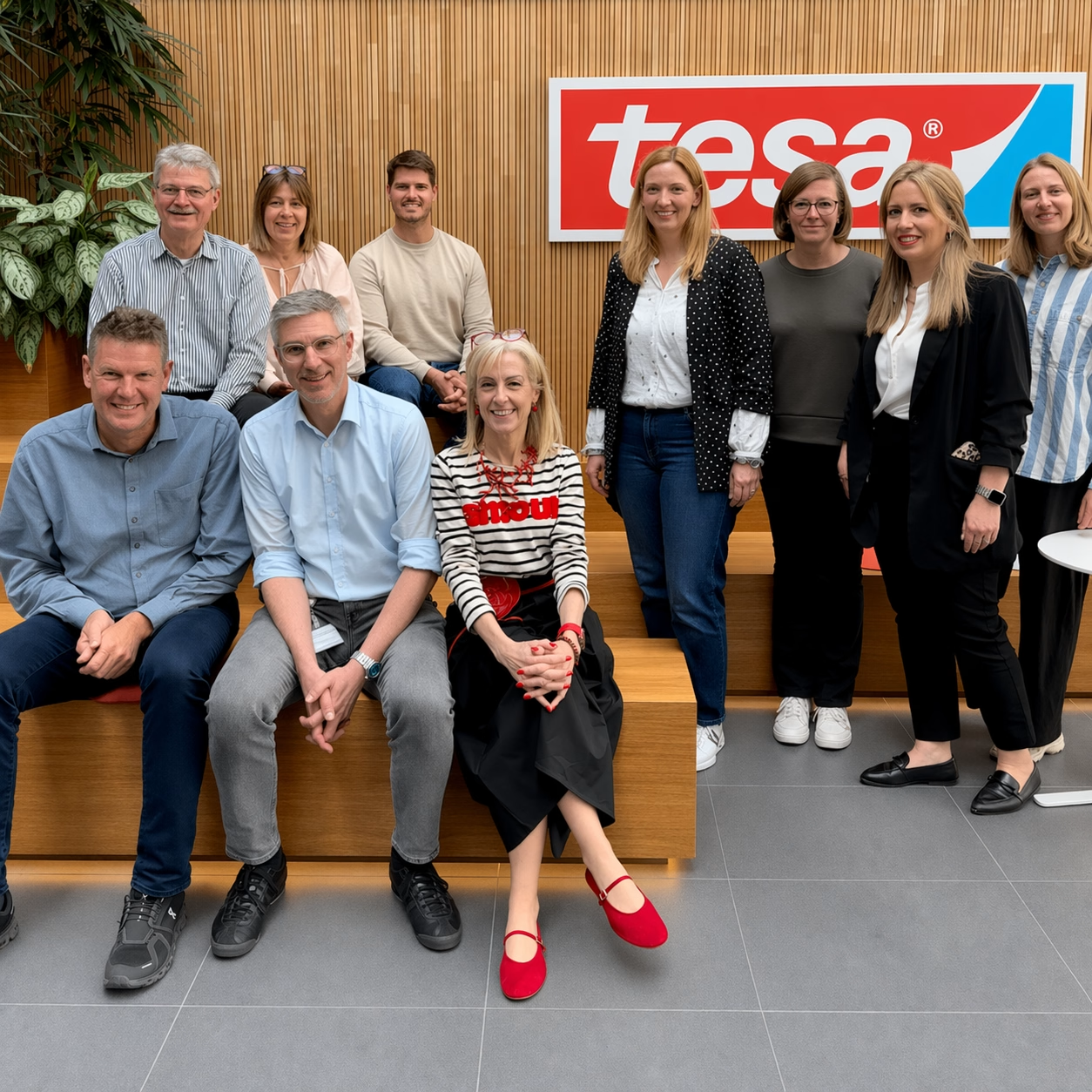
In May, the workshop series continued at tesa SE in Hamburg. Together with leading minds from Corporate Real Estate Management, concrete use cases for Corporate Real Estate and Facility Management were developed, evaluated and refined.
Here, too, it became clear: the need for practical AI solutions is high. The cross-company exchange on experience, challenges and success factors in the introduction of AI was particularly valuable.
Christian Hofmann and the facility management team at tesa SE, as hosts, made a particular contribution to the success of the workshop. In addition, Daniel Basic (Arvato), Sascha Glück (DHL), Stefan Brücher (DNV), Dennis Weber (Eppendorf) and Danilo Neitzel (OTTO Group) enriched the discussions with valuable practical insights and different perspectives on the challenges and potential of AI in the corporate real estate environment.
The results ranged from concrete AI use cases for CREM and Facility Management to initial prototype approaches and a shared understanding of how AI can be meaningfully and sustainably embedded in organisations.
The finale in Berlin
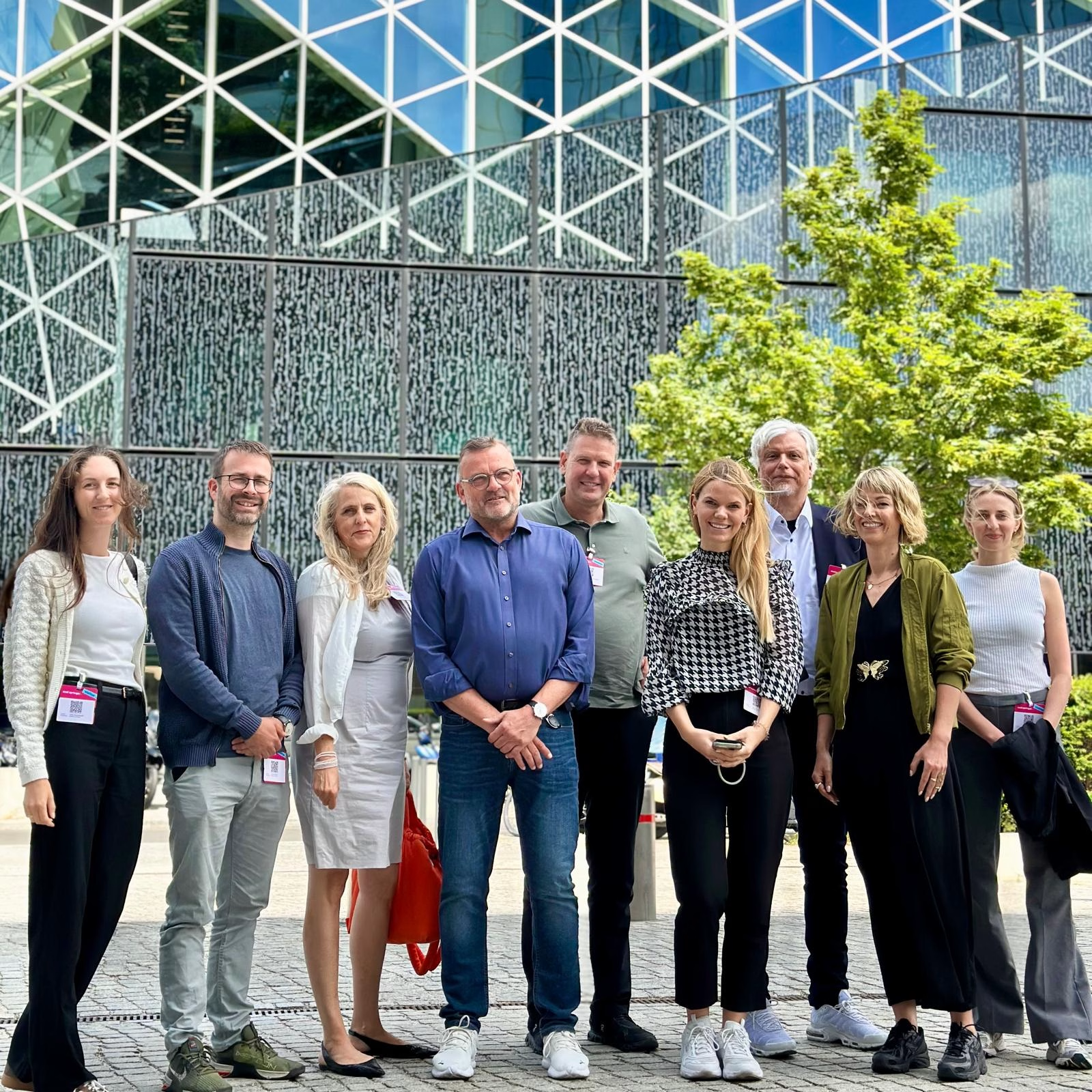
As part of the third stop of KI Mission CREM, high-calibre CREM experts from various companies once again came together in Berlin to identify, evaluate and further develop concrete use cases for artificial intelligence in Corporate Real Estate Management.
Once again, one thing became clear: the challenges surrounding data, processes, governance and the introduction of AI are surprisingly similar across company boundaries. At the same time, there is a strong willingness to systematically integrate AI into organisations and make use of the opportunities associated with it.
A key component of the successful exchange was the contributions from Axel Springer as host, as well as Janin-Isabel Hamels (Volkswagen Immobilien), Henry Kage (Siemens Energy), Gina Lose Sennewald (Jungheinrich AG), Dr. Christian Schneider (DKB Service GmbH), Bettina Bloch (Deutsche Bahn) and Dennis Bilous (CARIAD), who provided valuable practical insights.
The workshop delivered valuable insights - from the prioritisation of relevant AI use cases and initial solution approaches and prototypes to key findings for successful AI transformation. It became particularly clear that both a solid data foundation and the active involvement of employees are decisive success factors for the sustainable use of AI in CREM.
What comes next?
One central learning from the workshop series so far runs through all events:
Successful AI applications are based on the intelligent use of data. Only the structured collection, preparation, linking and analysis of information creates the basis for better decisions along CREM processes. However, the human factor is just as crucial. Successful AI transformation begins with employees – with openness, curiosity and the willingness to further develop established ways of working.
With the insights from now more than 100 evaluated AI use cases, we are currently working on a practice-oriented handbook for the use of AI in Corporate Real Estate Management. The collected experience and best practices are intended to help companies identify concrete potential and successfully implement AI projects.
Conclusion:
KI Mission CREM is more than a workshop series. It connects exchange, co-creation and concrete implementation – from the initial idea and use case through to the prototype. In this way, together with companies from the industry, a practical network is emerging that not only discusses AI in Corporate Real Estate Management, but actively shapes it.
Because the added value of AI does not arise from technology alone – but from its successful application in practice.